Caring Earth, Caring People, Shared Present
Permaculture pathways beyond sustainability in Sardinia
DOI:
https://doi.org/10.31273/eirj.v13i1.1776Keywords:
Sardinia, Permaculture, Diverse economies, Ethnography, relatedness, alternative economy, sustainability cultureAbstract
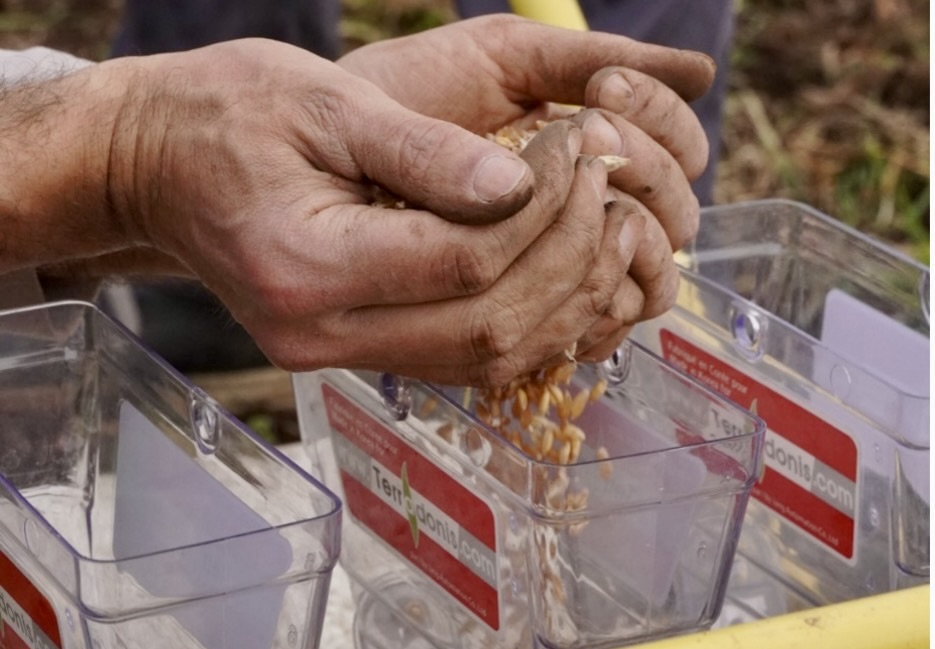
The article reflects on how permaculture offers a framework for signifying sustainability on a daily basis, focusing on practices and projects carried out by permaculturists in Sardinia. Three ethics of permaculture—earth care, people care, and fair share—emerge as pivotal in driving actions and choices. Projects are modelled on an ecological resilience-oriented model mimicking nature, which allows for structuring the world based on relationships that can address growing environmental concerns. Through ethnographic examples of wheat production and customs among visiting friends, the article illustrates how nature serves as a model for people, merging with local agro-pastoral traditions and claims to island identity. In Sardinia, permaculturists’ ethical orientation towards every living and non-living element of the system combines with local cultural customs, in a shift from agricoltura to agricultura. This alternative ontology based on relatedness blurs the boundaries between human and non-human and between past, present, and future. Caring for humans thus becomes caring for soils, microbes, vegetation, winds, and rain; caring for future generations means fairly sharing the world between humans and non-humans in the present.
Downloads
Downloads
Published
Issue
Section
License
Copyright (c) 2026 Maria Giovanna Cassa

This work is licensed under a Creative Commons Attribution 4.0 International License.
Authors who publish with this journal agree to the following terms:
Authors retain copyright and grant the journal right of first publication with the work simultaneously licensed under a Creative Commons Attribution License (CC-BY), which permits use and redistribution of the work provided that the original author and source are credited, a link to the license is included, and an indication of changes which were made. Third-party users may not apply legal terms or technological measures to the published article which legally restrict others from doing anything the license permits.
If accepted for publication authors’ work will be made open access and distributed under a Creative Commons Attribution (CC-BY) license unless previously agreed with Exchanges’ Editor-in-Chief prior to submission.
Authors are able to enter into separate, additional contractual arrangements for the non-exclusive distribution of the journal's published version of the work (e.g., post it to an institutional repository or publish it in a book), with an acknowledgement of its initial publication in this journal.
Authors are permitted and encouraged to post their work online (e.g., in institutional repositories or on their website) prior to and during the submission process, as it can lead to productive exchanges, as well as earlier and greater citation of published work. (see: The Effect of Open Access)